Start from a clean draft.
Make the call yourself.
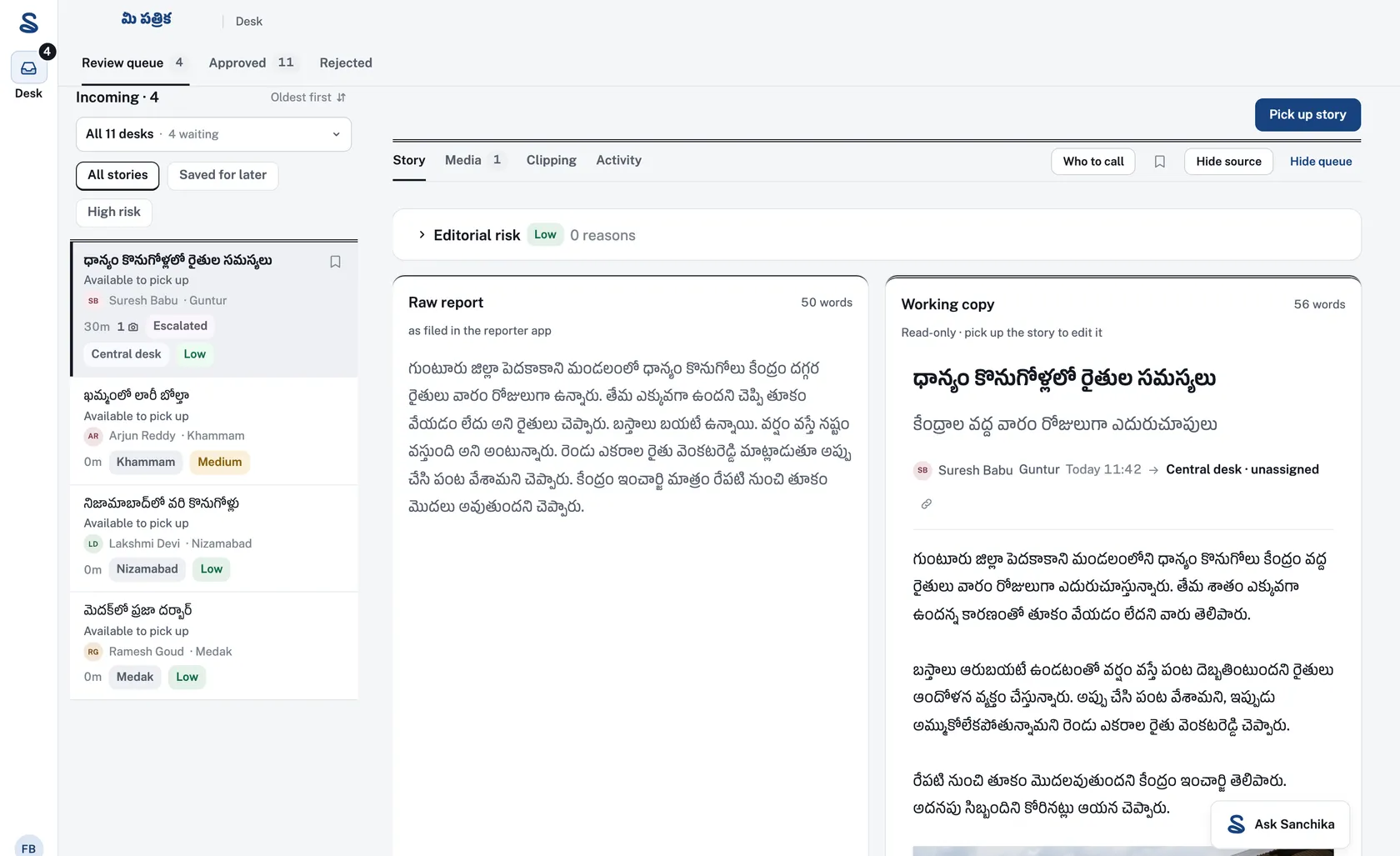
Stories reach your queue ready to read, with the reporter’s original beside them. The time goes on judgement, not on retyping.
The queue says what’s next.
Every story on your desks: who filed it, how long it has waited, and which ones need a second look.
Pick it up, and it’s yours.
One person holds a story at a time, so two editors never work on the same copy.
Original on one side, copy on the other.
Edit it yourself, or ask Sanchika for a shorter headline. You see every suggestion before it touches the copy.
Approve, and the next story is up.
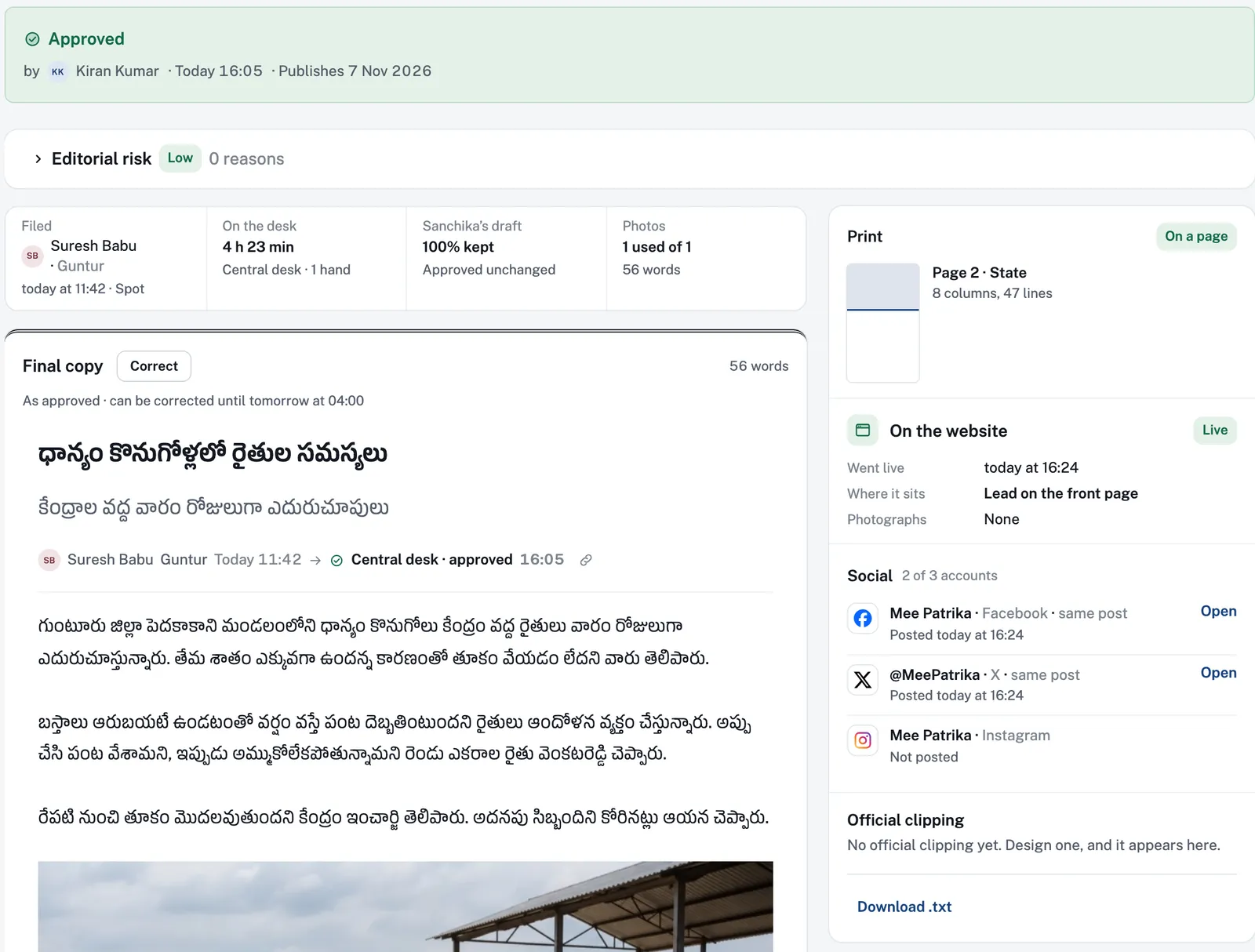
The queue moves on. The story’s own page shows print, the website and social, each with where it stands.
What stops
- Two people editing the same story.
- Hunting for what the reporter actually sent.
- Asking who changed a line, and when.
What stays yours
Nothing is approved without an authorised editor. Corrections stay open until your press time, and the words before are kept.
A report filed in another language arrives translated, with the original beside it. Agency copy works the same way: browse the wire, take what your newsroom needs, and it joins the queue.
The real product on a sample newsroom. The story, the people and the masthead are fictional. Screens show a sample newsroom in Telugu.